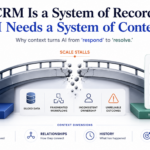
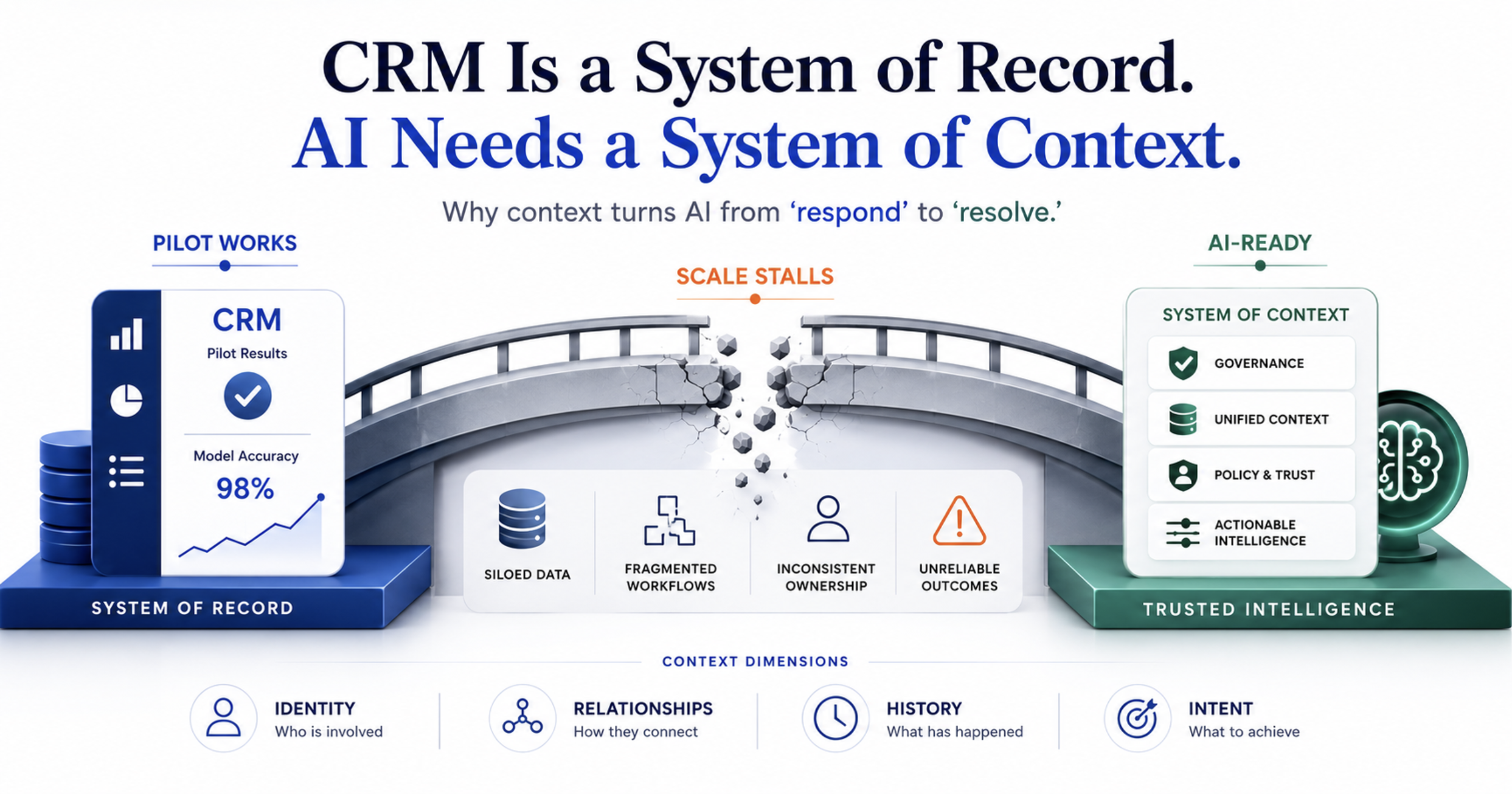
CRM Is a System of Record. AI Needs a System of Context.
Why connecting an AI agent to Salesforce, HubSpot, or another CRM still may not give it enough information to make the right customer decision.
CRM records the relationship. It captures accounts, contacts, opportunities, activities, campaigns, cases and ownership. These systems remain the operational memory of GTM.
But AI agents do not just need to know what was recorded. They need to understand what is true, relevant and permitted at the moment a decision has to be made.
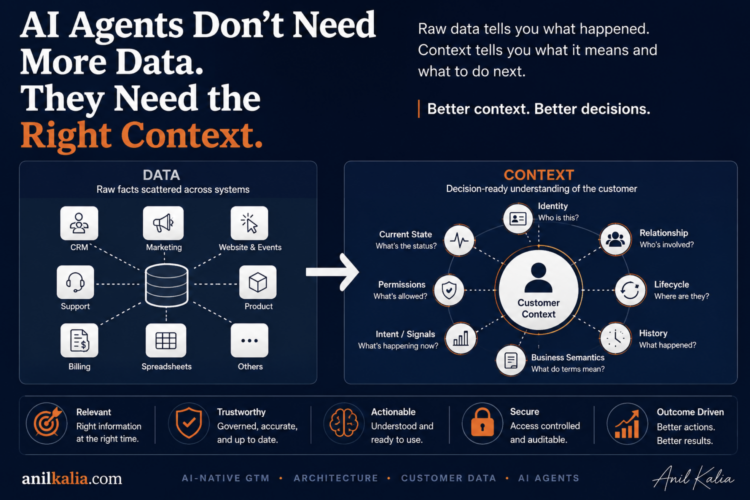
That is the job of a System of Context. It brings together identity, relationships, current state, history, signals, semantics, policy and provenance so the agent can understand the situation and make the right decision.
1. System of Record vs System of Context
CRM tells us what the organization recorded. A System of Context tells an AI agent what the situation means right now so it can decide and act correctly.
- Accounts
- Contacts
- Opportunities
- Activities
- Cases
- Ownership
- Lifecycle
- Campaigns
- Identity
- Relationships
- Current State
- History
- Signals
- Semantics
- Policy & Permissions
- Provenance
2. Why CRM Alone Doesn’t Give an Agent Enough Context
Customer information is distributed across multiple systems. Each system owns part of the truth.
Inbound Pricing Request
New company
No opportunity
No relationship
Existing customer
Active opportunity
Pricing in review
Renewal Agent
One Customer, Many Systems
Commercial
Usage
Service
Subscription
Identity
Lead Routing
example-global.com
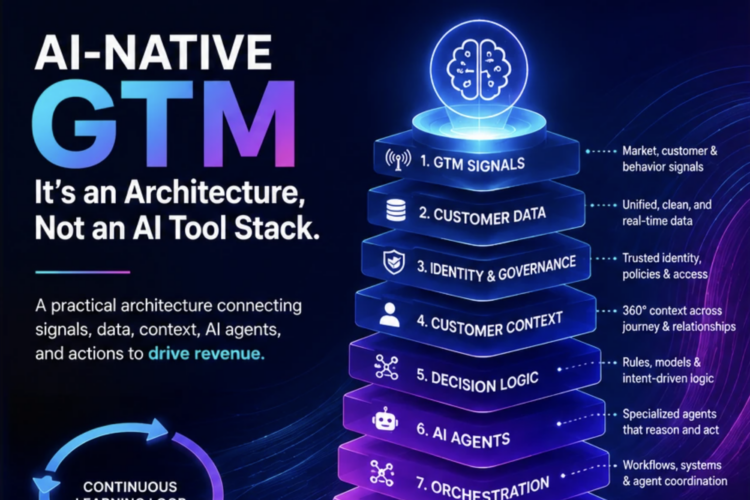
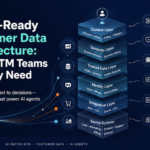
3. The System-of-Context Architecture
4. The Eight Dimensions of Customer Context
5. Context at Decision Time
There is no universal customer context. Each decision requires a different slice of enterprise information.
6. Leadership Should Care Because Context Changes AI Risk
If context architecture is weak, AI can contact the wrong customer, trigger parallel sales motions, make poor recommendations, corrupt CRM state, or create experiences that are technically correct but commercially wrong.
Questions leadership should ask before approving another customer-facing agent
| Executive question | Architecture implication |
|---|---|
| Who owns customer identity? | MDM / identity architecture |
| What happens when CRM and billing disagree? | Source authority |
| How fresh must context be? | Integration / freshness contract |
| What does “qualified” or “at risk” mean? | Semantic governance |
| What may the agent read? | Data security and permissions |
| What may it change? | Action governance |
| Can we explain why it made the decision? | Provenance / observability |
| What happens after a human override? | Feedback architecture |
7. Read Access and Action Authority Are Not the Same
An agent may be allowed to read pricing information internally without being allowed to send pricing externally. It may detect a duplicate without being allowed to merge it. It may recommend a discount without being allowed to approve one.
The governance model needs to distinguish what the agent can understand from what the agent can change.
8. Memory Matters for Agents
A System of Context also needs to distinguish authoritative business records, customer history, agent memory and temporary runtime context. These should not be mixed casually.
9. Do Not Turn the System of Context Into Another Monolith
The goal is not to copy every enterprise record into a new context database. The goal is to make the right governed context available when a decision requires it.
That may involve materialized data, federation, APIs, events, semantic models, MDM, knowledge retrieval or runtime context assembly.
10. How GTM Teams Should Start
- Define one important decision.
- Identify the context that can materially change the answer.
- Map source authority.
- Define freshness requirements.
- Define semantics.
- Establish read permissions.
- Establish action authority.
- Capture provenance.
- Observe the decision.
- Capture feedback.
CRM Records the Relationship. Context Explains the Situation.
CRM remains one of the most important systems in GTM architecture. AI does not diminish that importance. It changes what the surrounding architecture must provide.
If nobody can answer that confidently, the next AI project may not actually be an agent project. It may be a context architecture project.